5 days to help students
find their future.
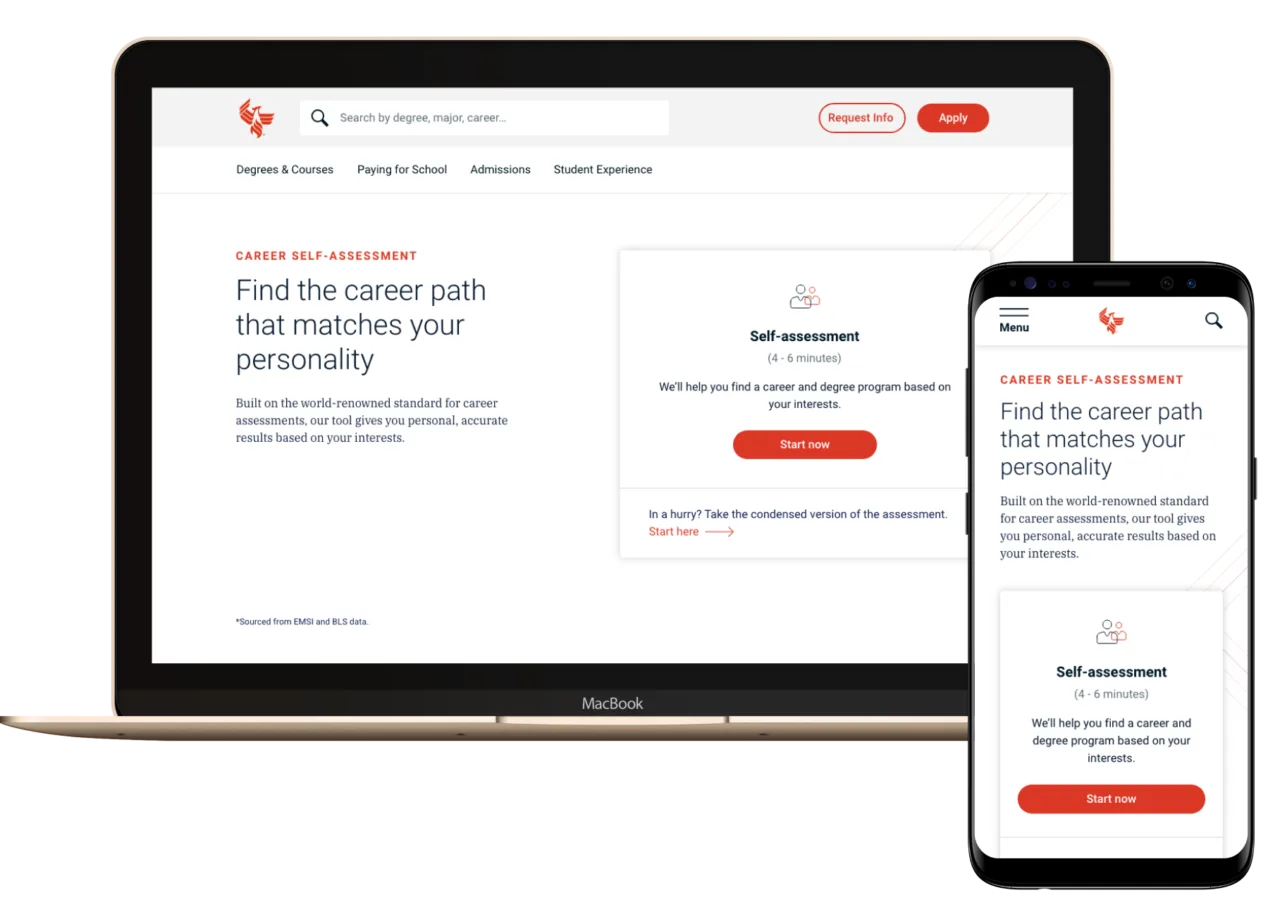
Find Your Path is a tool designed to help future students discover the best-fit degree programs that align with their interests. Students come to us with varying levels of understanding about their desired programs and career paths.
Business Goals
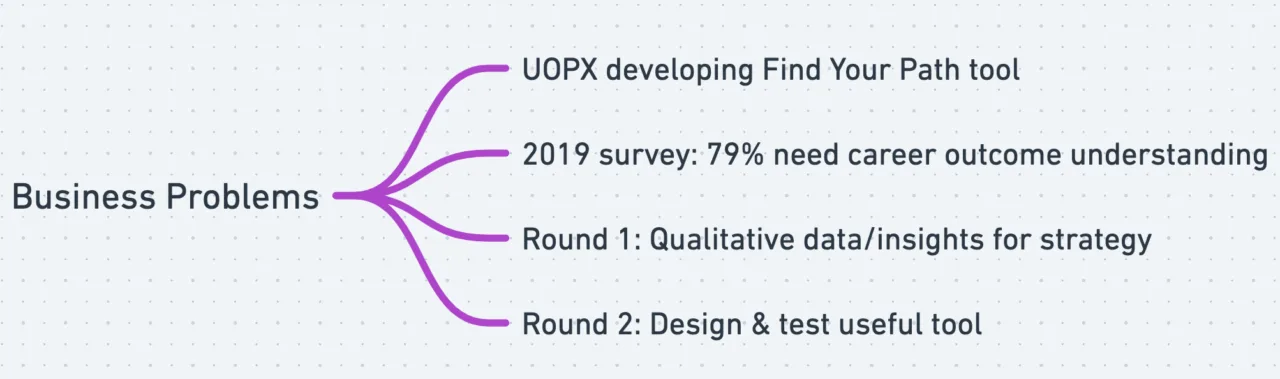
UOPX is developing a "Find Your Path" tool for phoenix.edu visitors to help them find degree programs that match their interests and skills. A 2019 survey found that 79% of future students need to understand career outcomes to feel comfortable selecting a degree program.
Team needs to gather qualitative data and insights to understand user needs, and identify the general strategy, direction, and value-added features for the tool. Then design and test a useful, easy-to-use "Find Your Path" tool.
User Interview
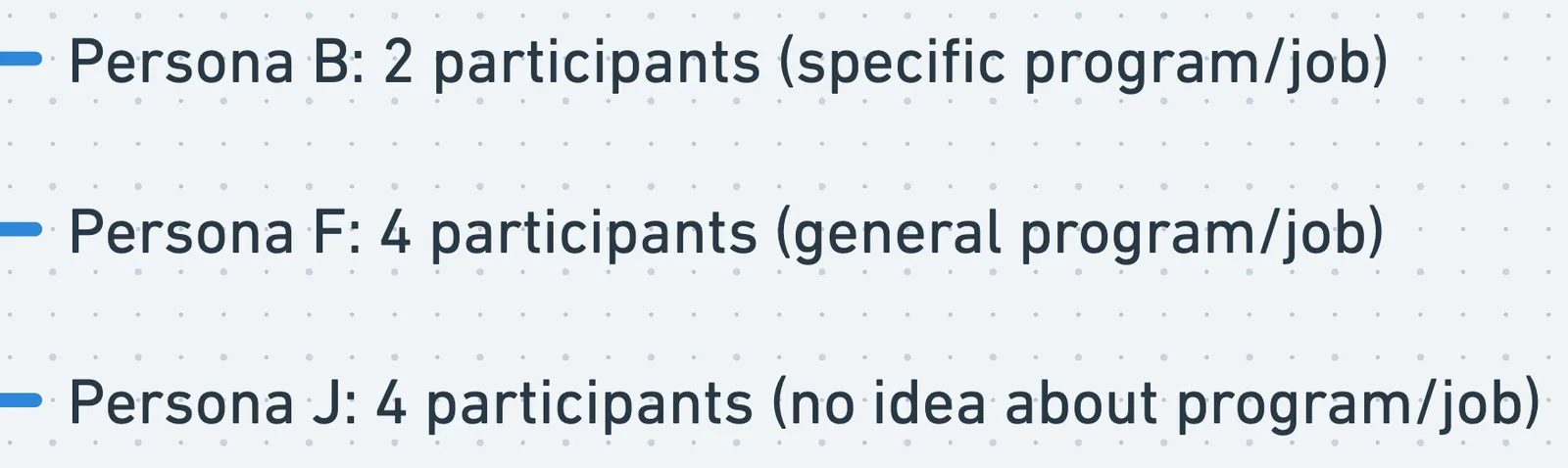
I recruited future students from three personas provided by marketing:
- Clearly knows the specific program and job they want
- Wants to skip assessments and go straight to the program finder
- Has a general idea of the field of study and career area
- Wants career-to-program matches without lengthy assessments
- Unsure about both what to study and which career path to pursue
- Prefers detailed assessments covering career, skills, interests
Research method
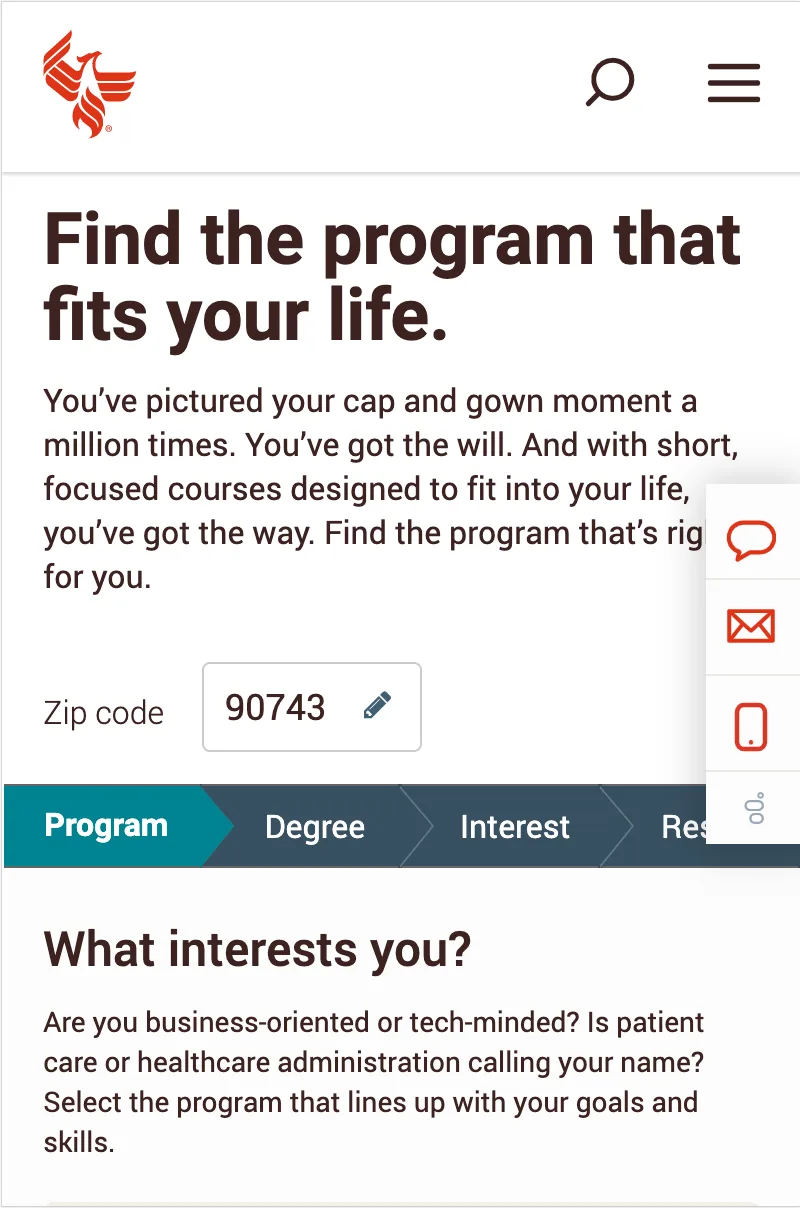
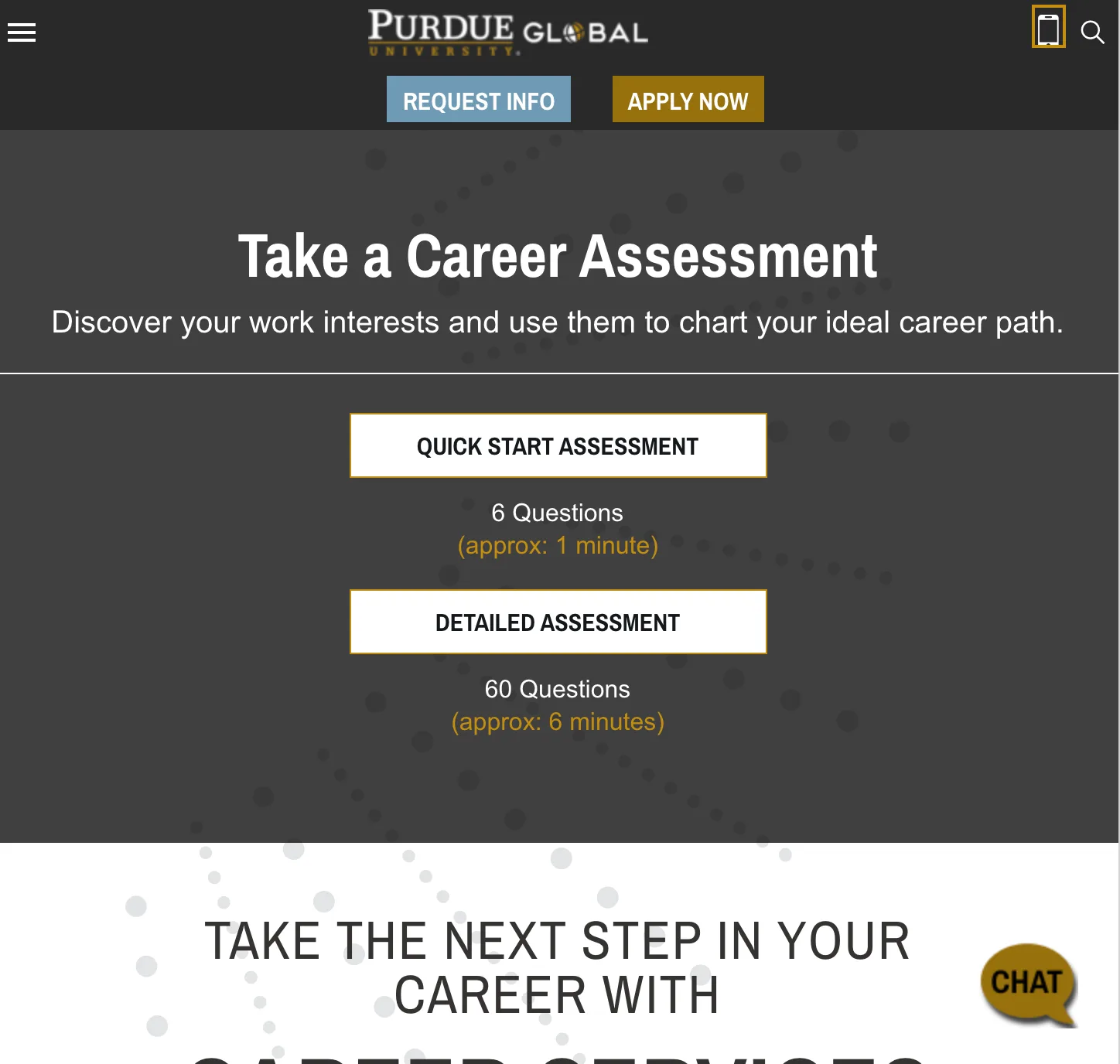
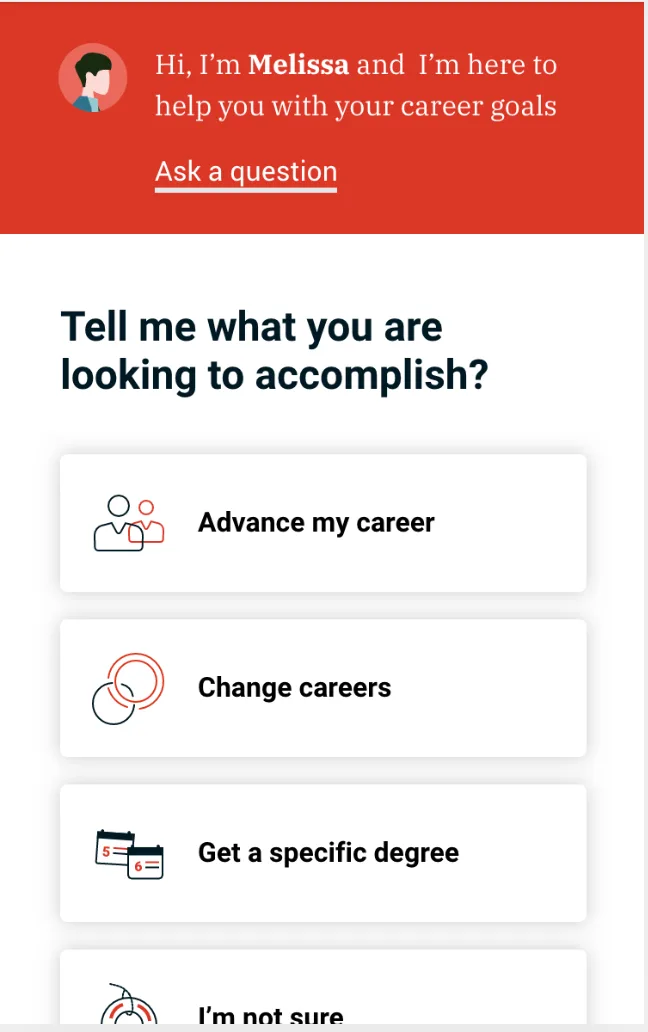
I conducted a remote moderated study to gather qualitative data and user feedback on two of our tools and two competitor products.
Research Objectives: Identify user needs and pain points in selecting degree programs, careers, and universities. Explore Find Your Path (FYP) concepts and features to determine what resonates with future students and why, guiding FYP design.
We observed behaviors and asked probing questions, such as:
- Would you start this tool as shown? Why or why not?
- Would you stop before finishing? Where and why?
- Which features resonate or don't resonate with you? Why?
- What is clear or confusing about this tool?
- On a 5-point scale, how helpful is the tool? (1=Not at all helpful; 3=Neutral; 5=Very helpful) Please explain.
Comparison: After exploring all concepts, we asked participants: Which concept resonates best with you? Which doesn't? Why? If you could pick any feature from any concept to create your ideal tool, what would you choose?
Research findings
We received valuable and informative feedback from our users. I created and presented detailed findings and recommendations to stakeholders:
- Prefer detailed assessments covering career, skills, interests, and program matches
- Want to see career-to-program matches instead of taking assessments
- Want to skip assessments and go straight to the program finder
Core insight: A single flow can't serve all three. The Decided wants to skip straight to program search. The Explorer wants career-to-program matching. The Lost needs a guided assessment. One tool, forked experiences.

5 Days Design Sprint
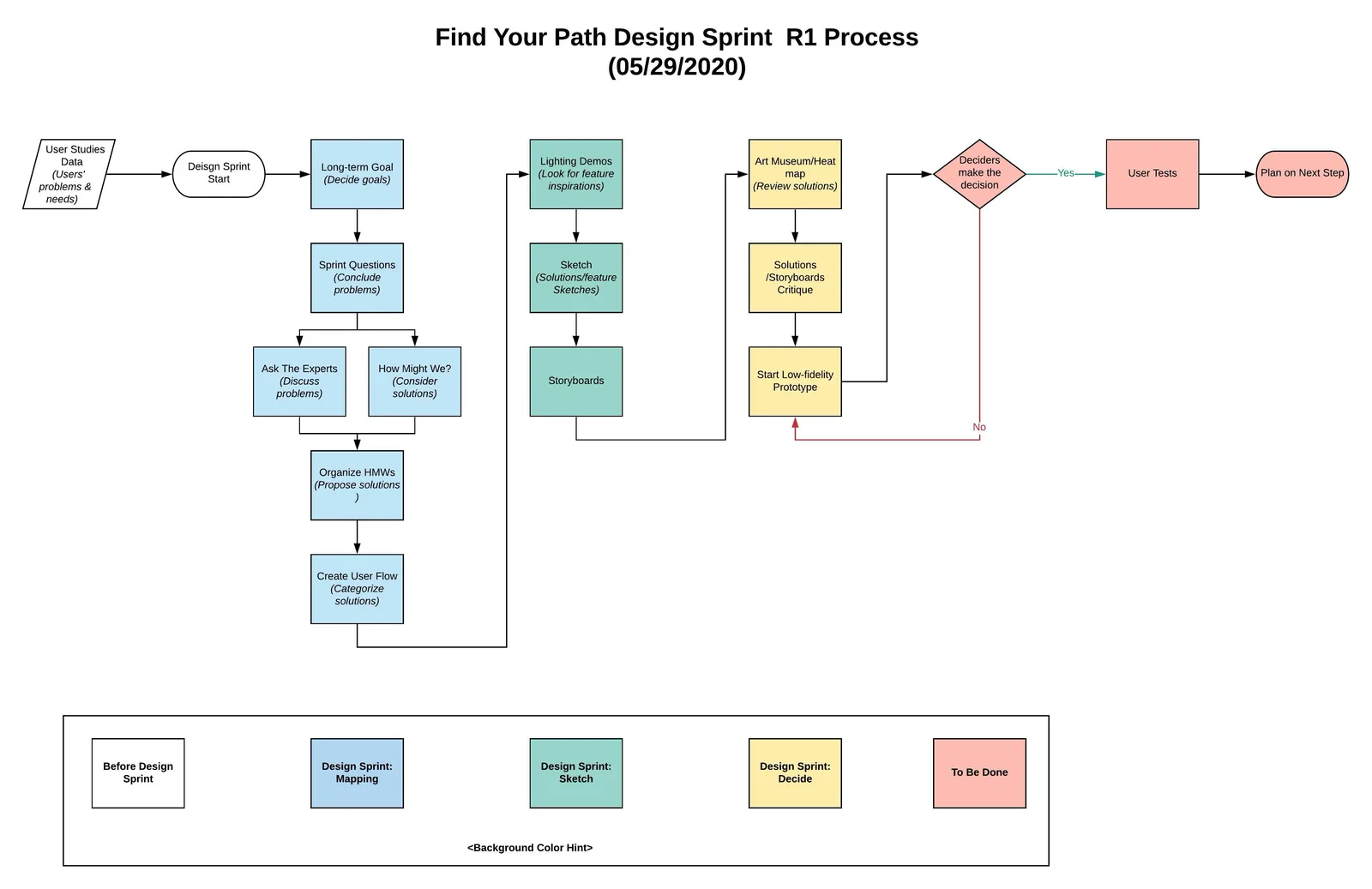
With user needs identified, we now focus on business goals, product expectations, and solution feasibility. I invited key stakeholders (executives, PMs, POs, developers, SEO, Legal, SMEs) for a 5-day design sprint. We broke it into five parts: Mapping, Sketching, Deciding, Prototyping, and Testing.
- Identify problems/goals and vote
- Prioritize problems and vote
- Explore solutions and vote
- Make decisions and vote
- Prototype and test
Participants (8-9 people): Facilitator: Me (designer). Experts (6): 1 researcher, 3 developers, 1 copywriter, 1 PM, 1 PO. Decision Makers (1-2).
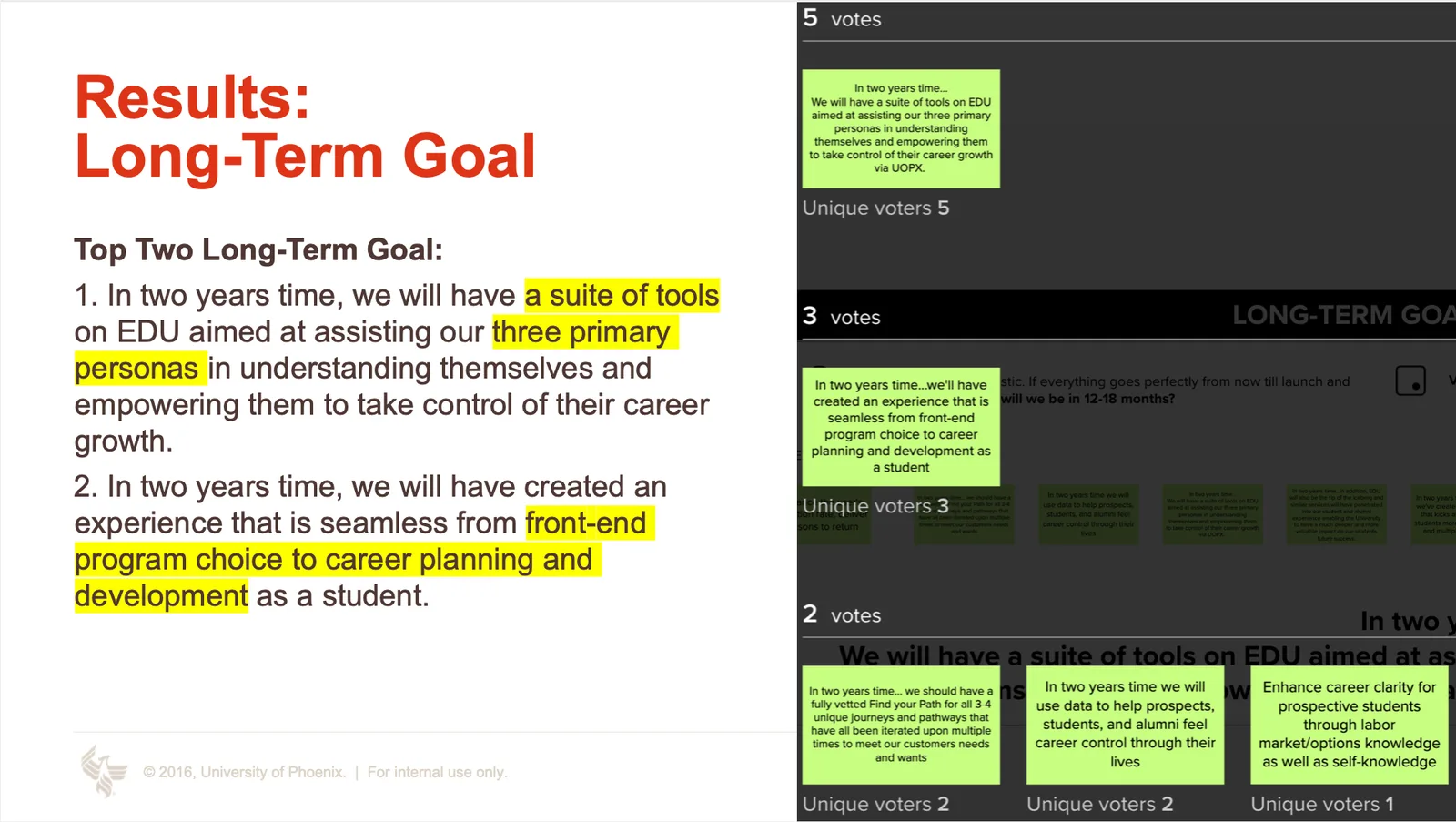
- Can our tool address users' main concerns?
- Will our tool support prospective students effectively?
- Can we maintain an easy-to-use UI/UX?
- Can we provide accurate and useful information?
- Can our data source meet customers' needs?
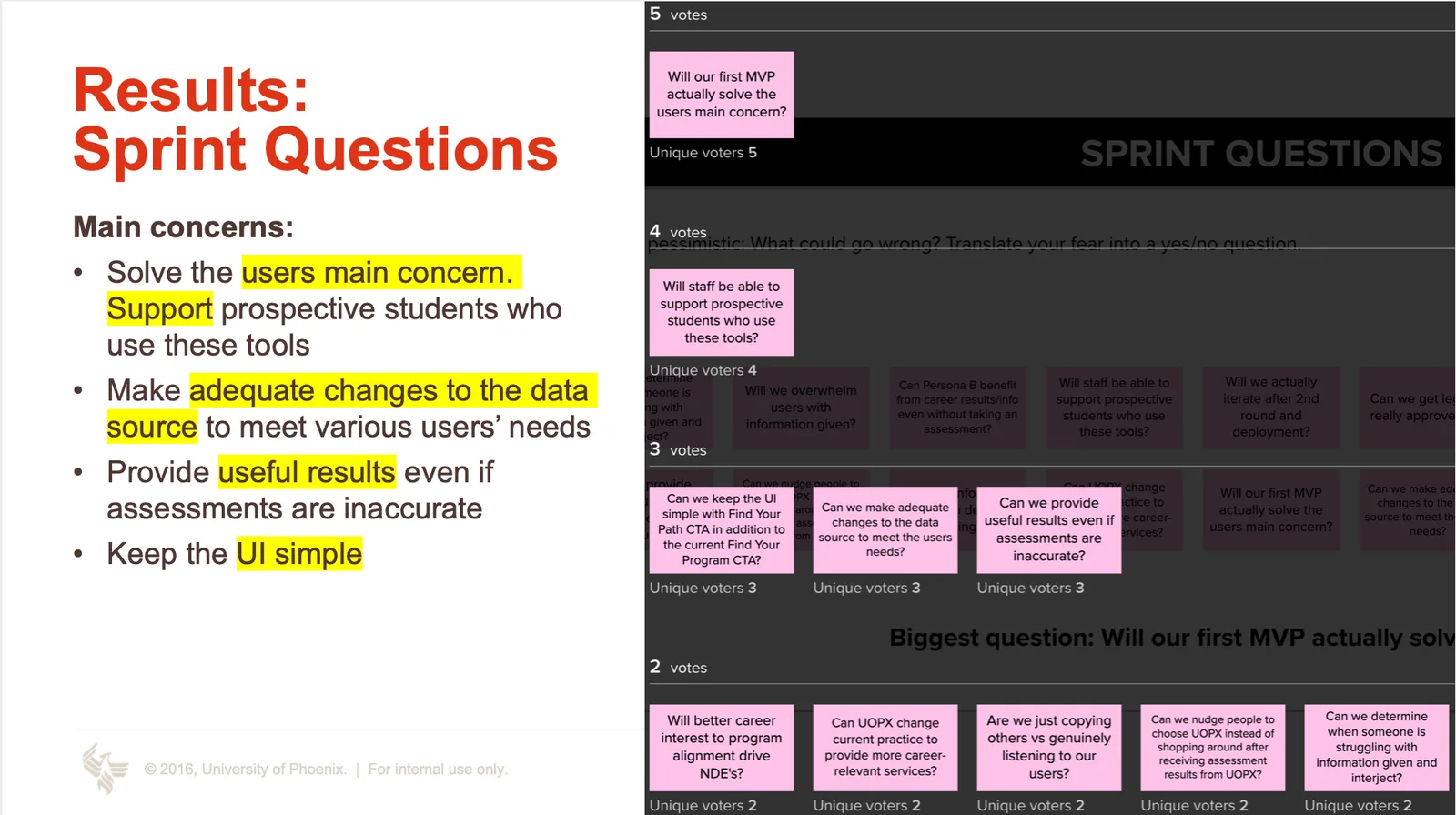
- Create a fun and inviting tool to maximize engagement
- Provide career info to address users' major pain points
- Bridge skill gaps with relevant programs
- Align the tool with employer needs (skills, job matches, top traits)
- Offer customized paths for diverse users
- Develop an ecosystem for users' long-term career growth
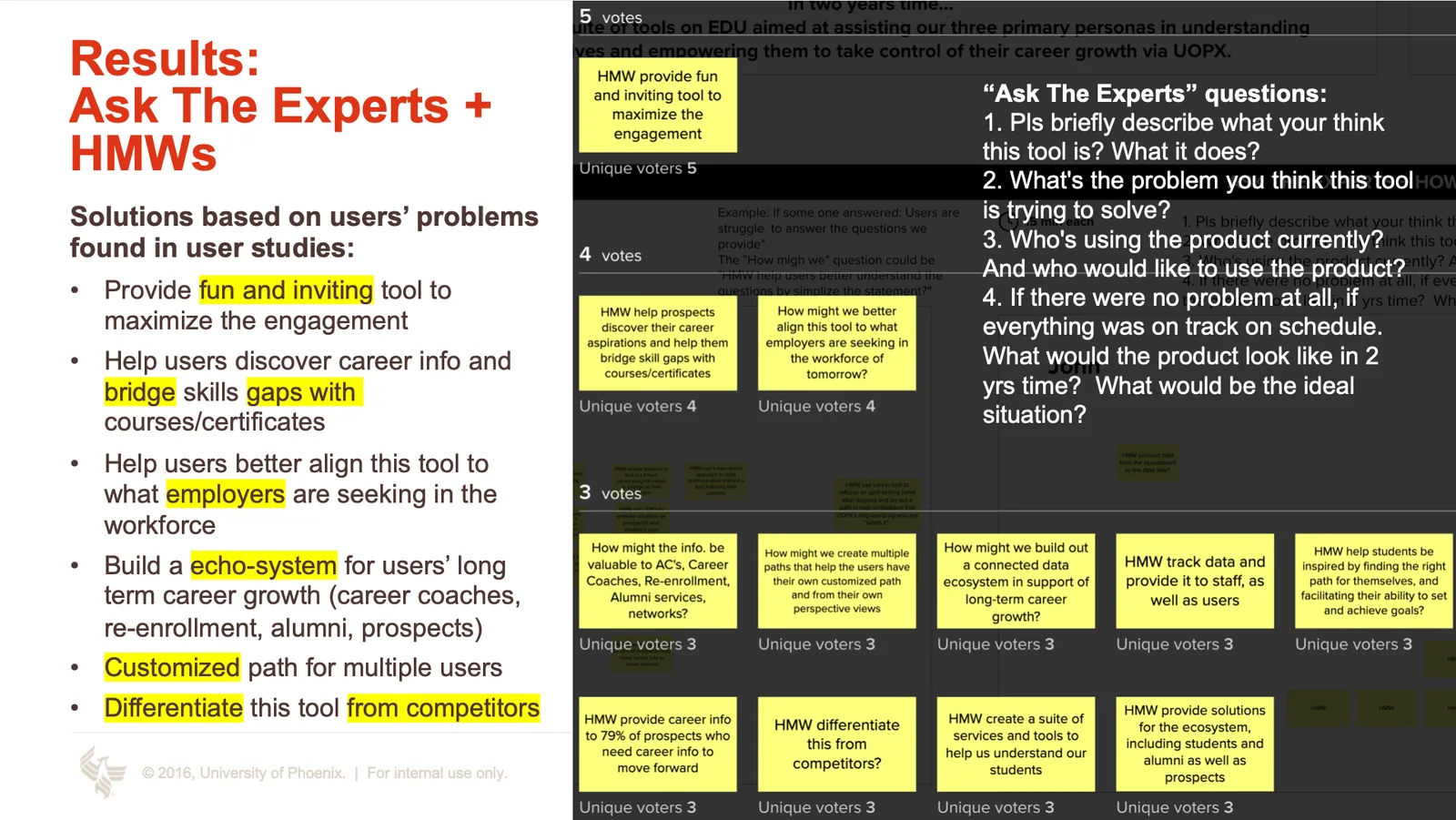
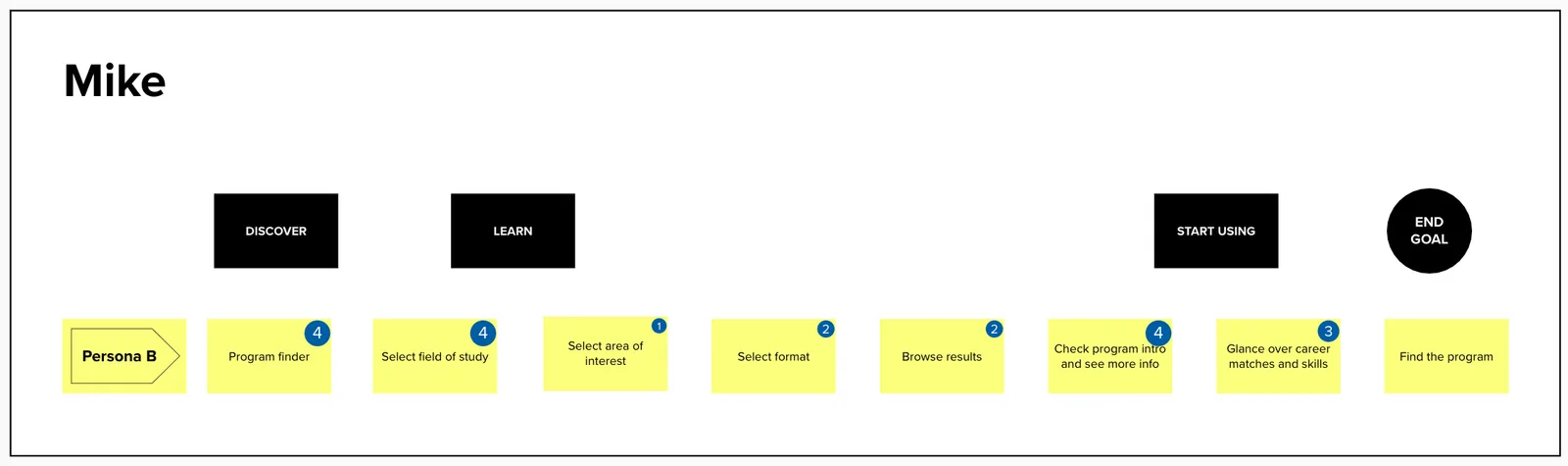
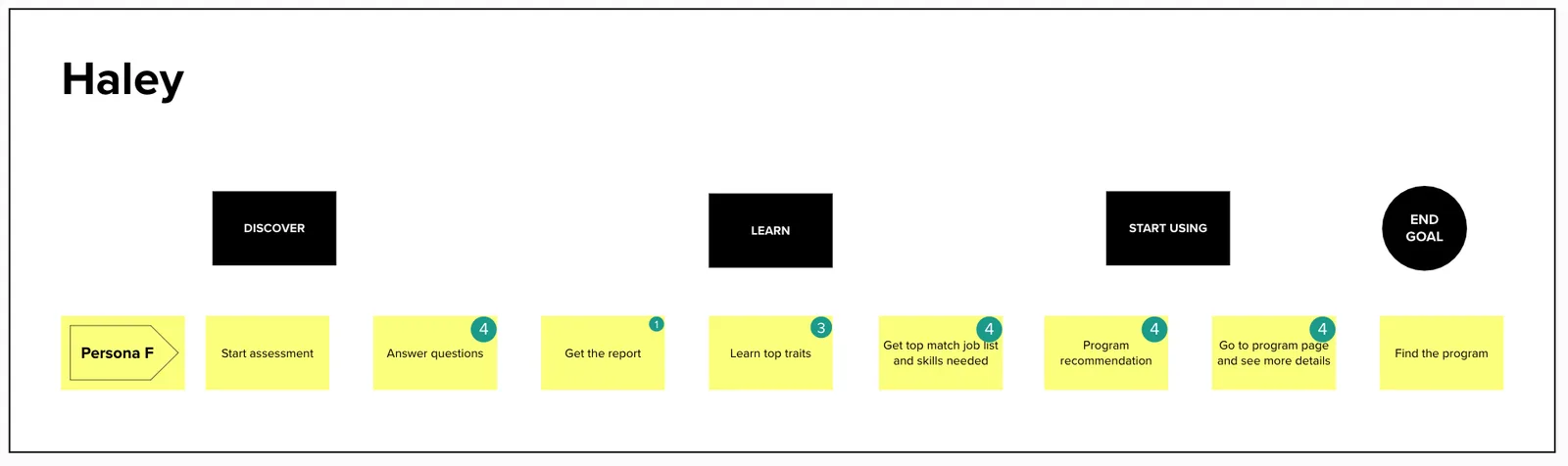
- Considered the top HMWs (business, product goals)
- Merged all the top notes into the map
- Discussed and removed notes with the lowest votes
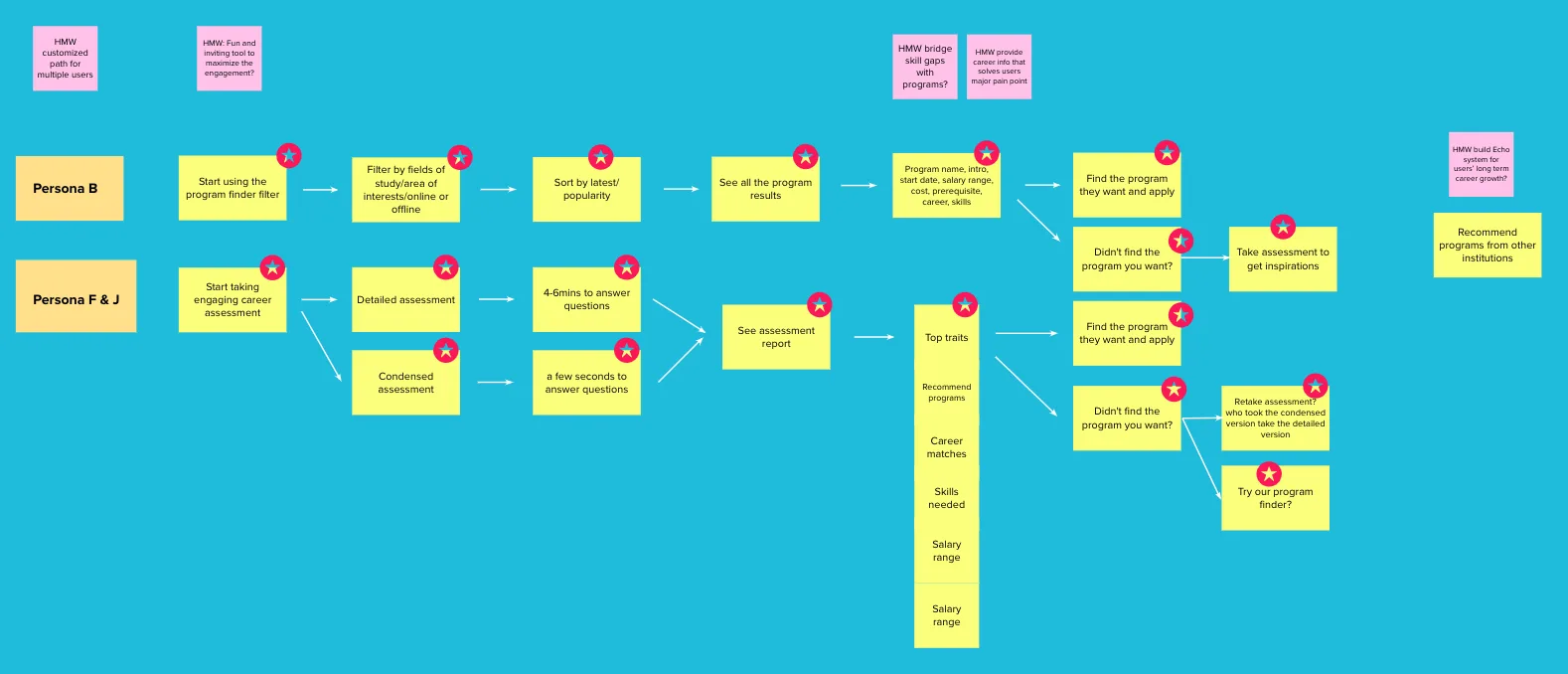
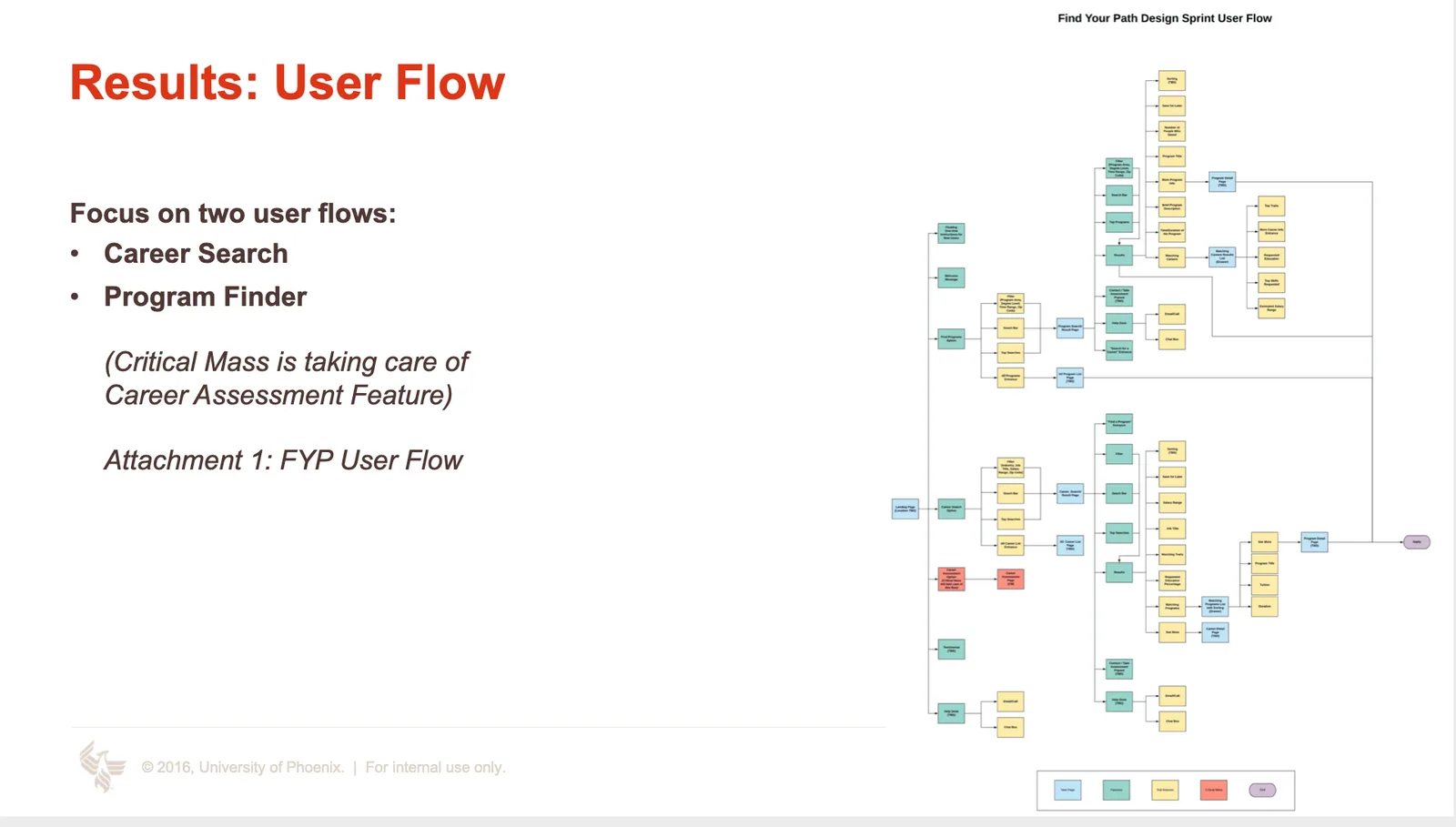
- The decision maker voted on the notes and made the final decision on the features and user flows
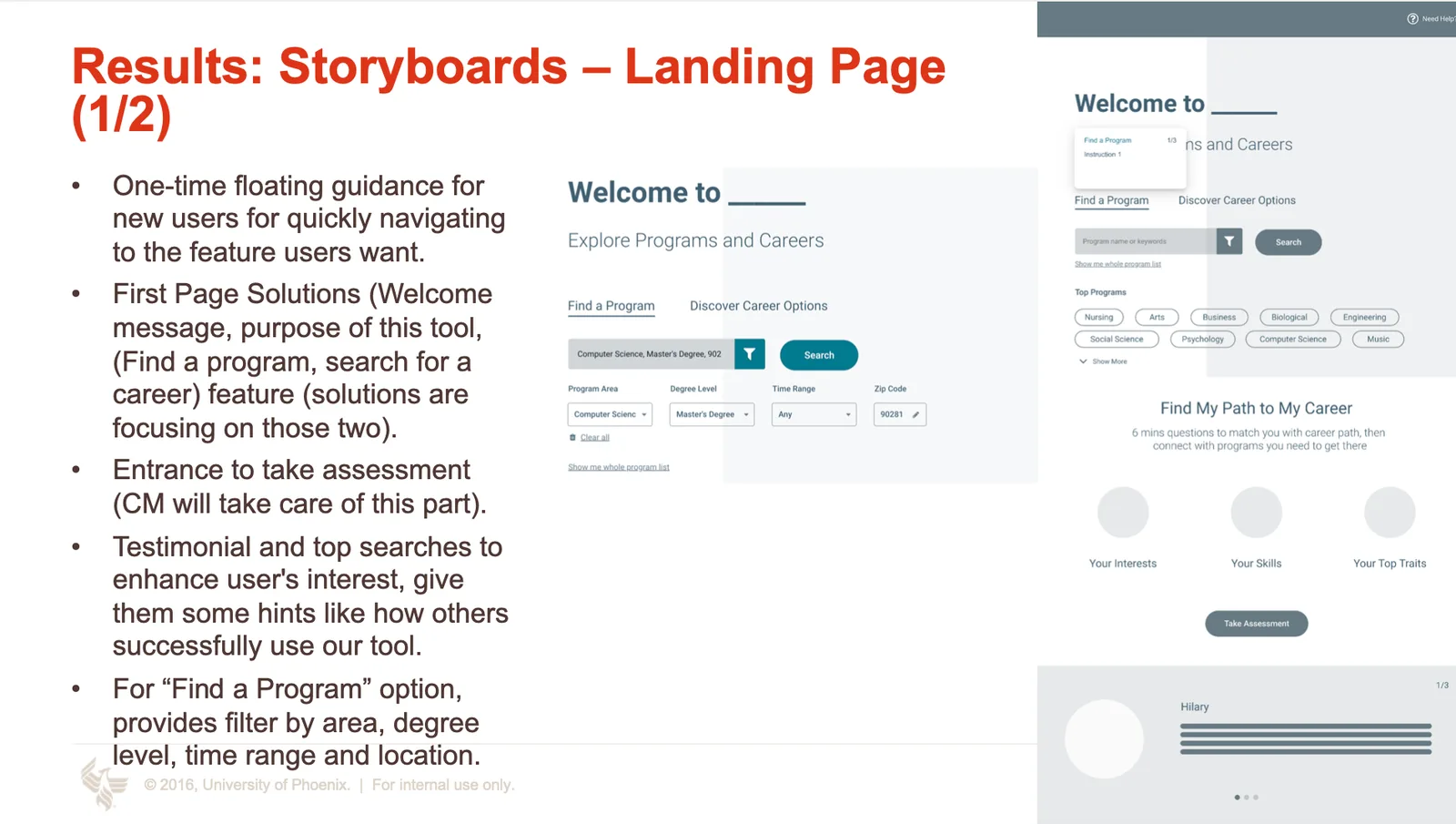
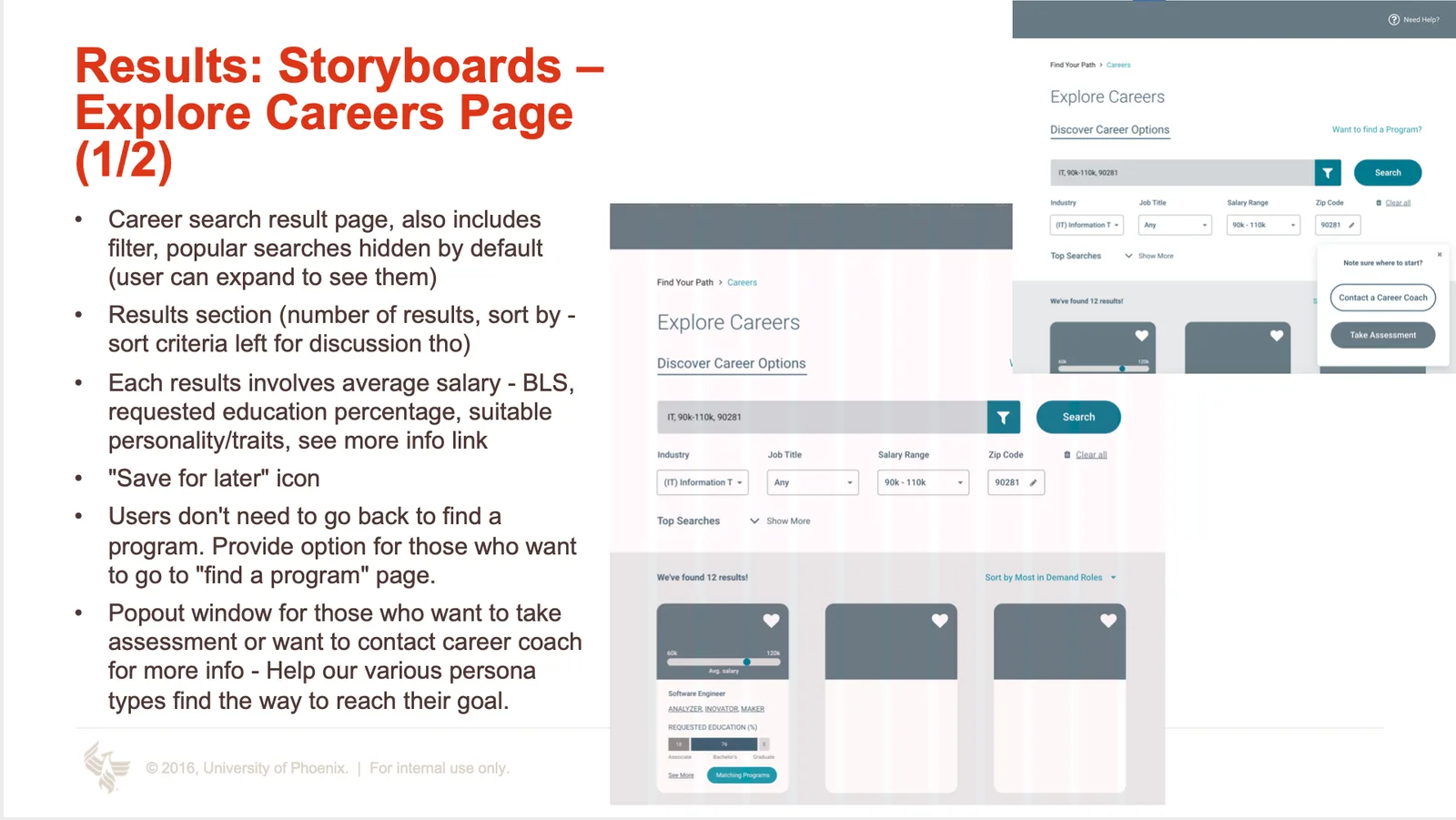
1. Career Search (F, J)
For Explorers and the Lost who need guidance
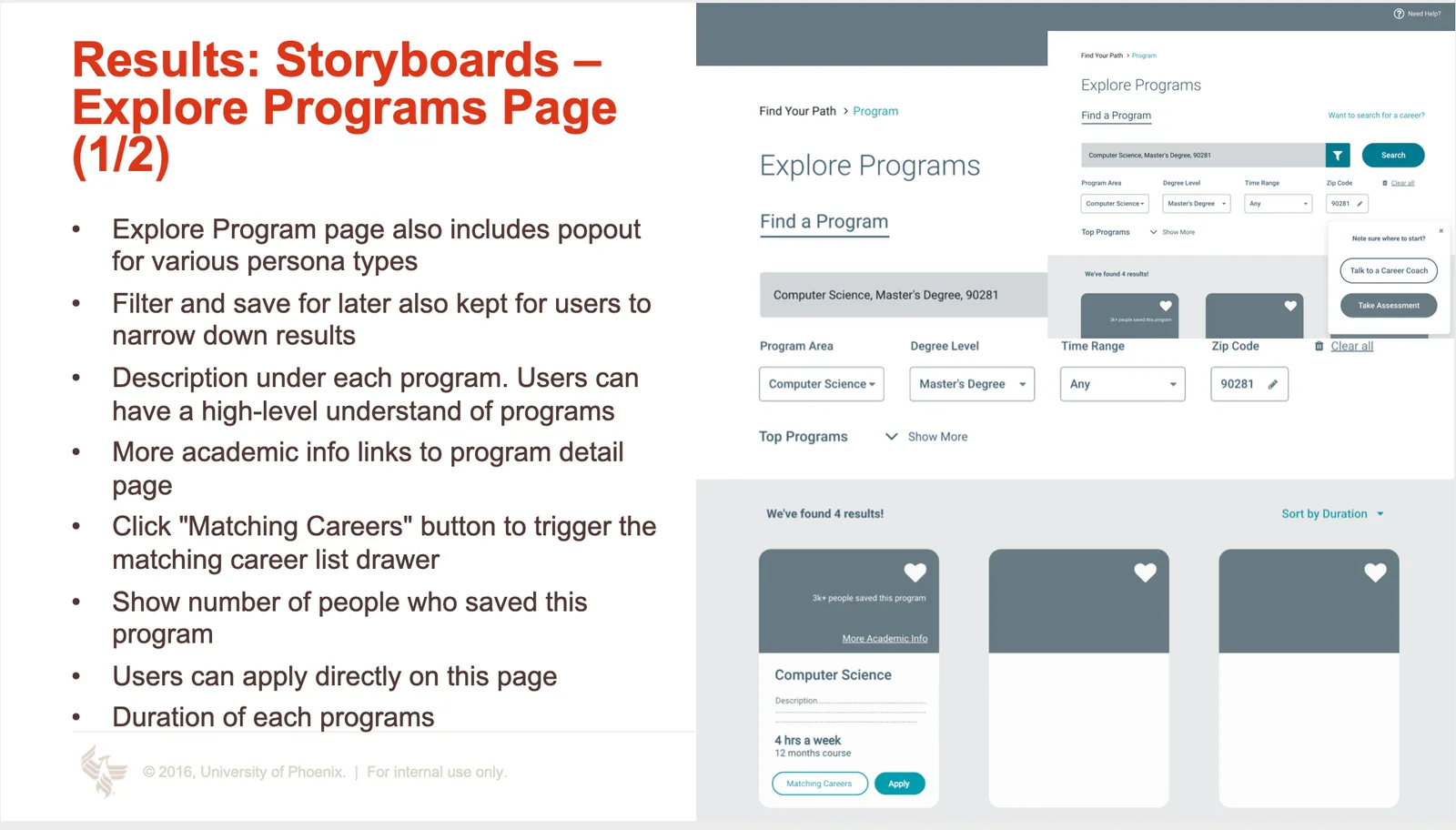
2. Program Finder (B)
For the Decided who know what they want
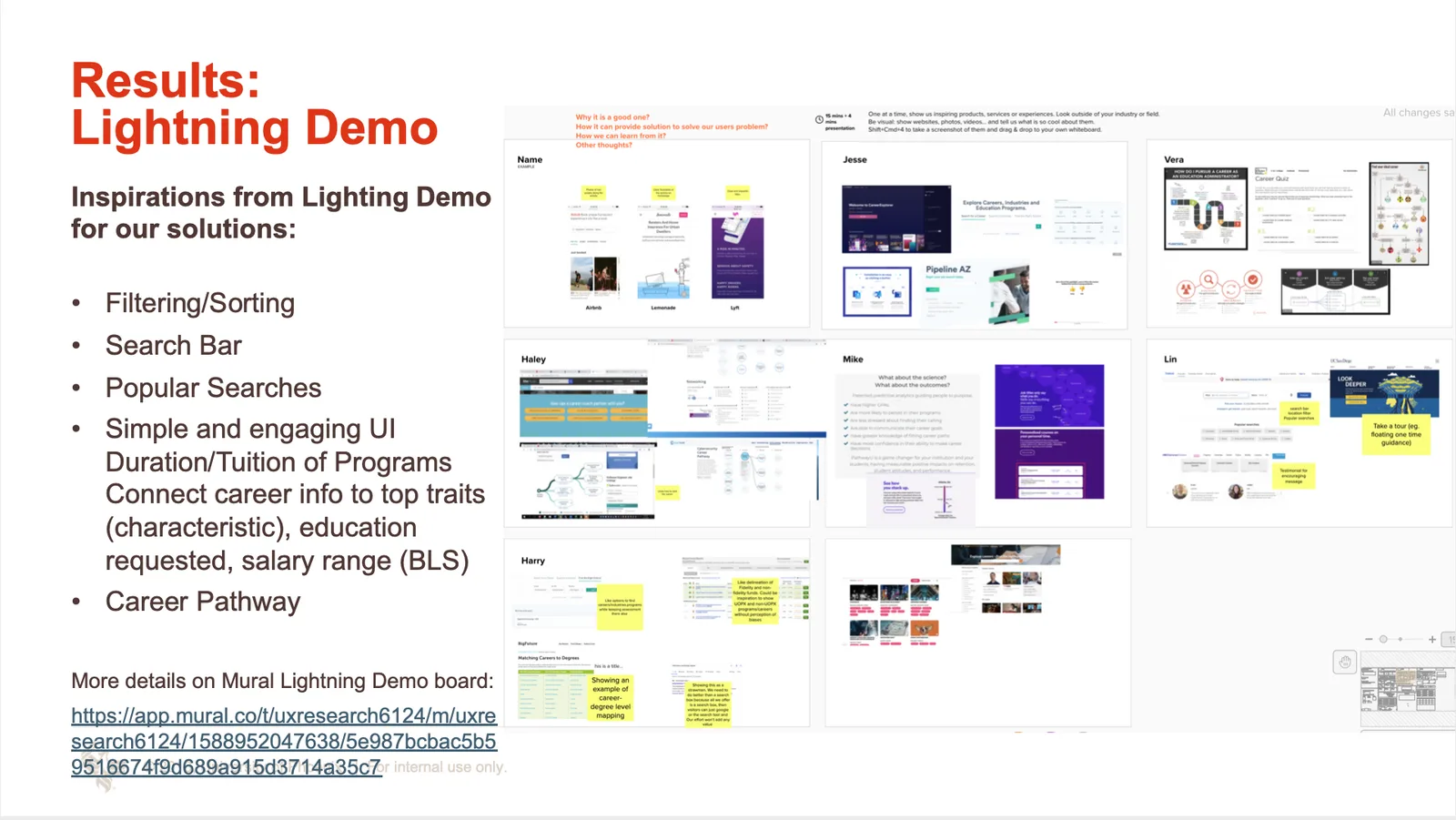
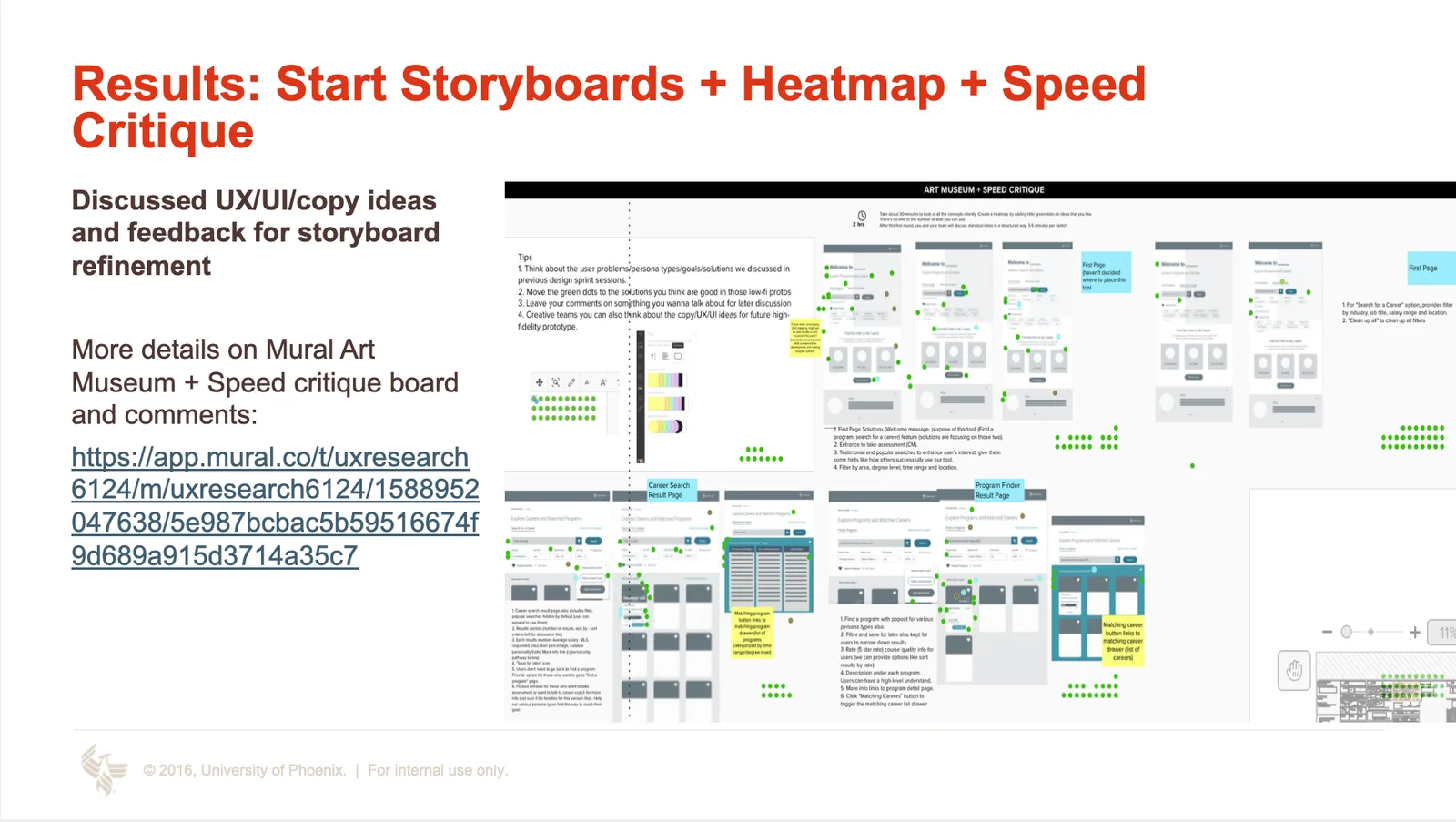
- Silently reviewed all the concepts
- Created a heatmap by adding little green dots to the ideas they liked
- Conducted a speed critique
- Held a straw poll
- Decide
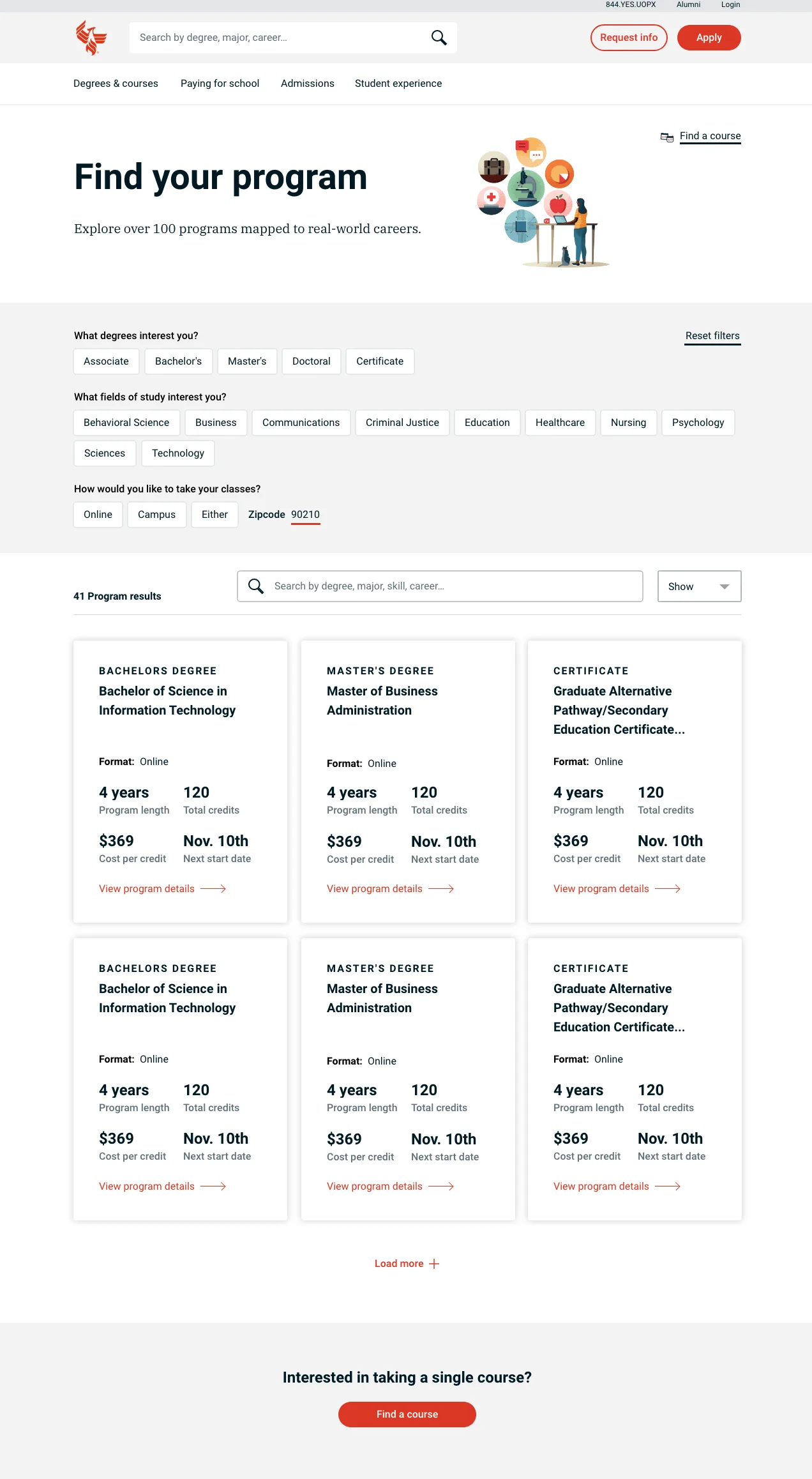
Program Finder
- Filtering & sorting
- Search bar
- Program intro
- Tuition of programs
- Start date
- Cost per credit
- Program length
- Education requested
- Salary range from BLS
- Career pathway
- Skills
Career Assessment
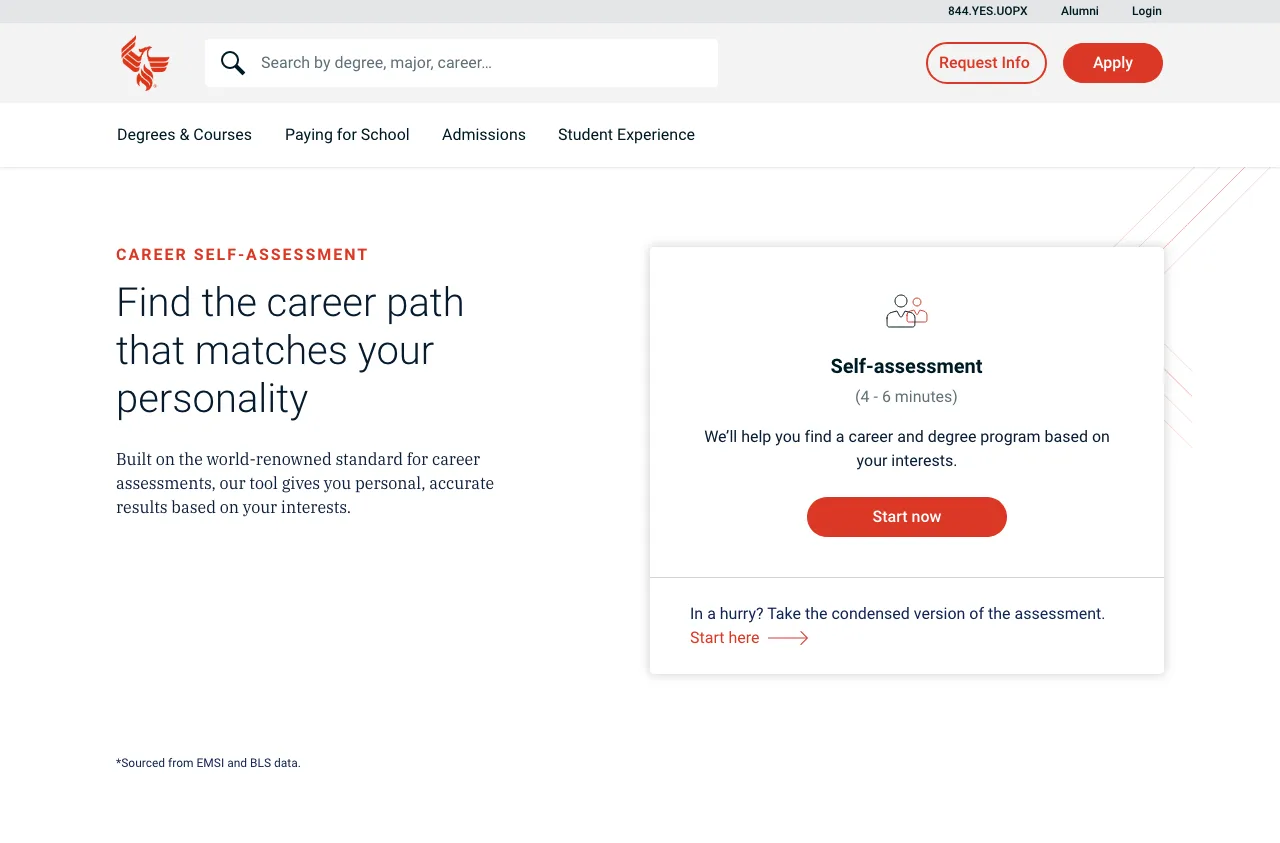
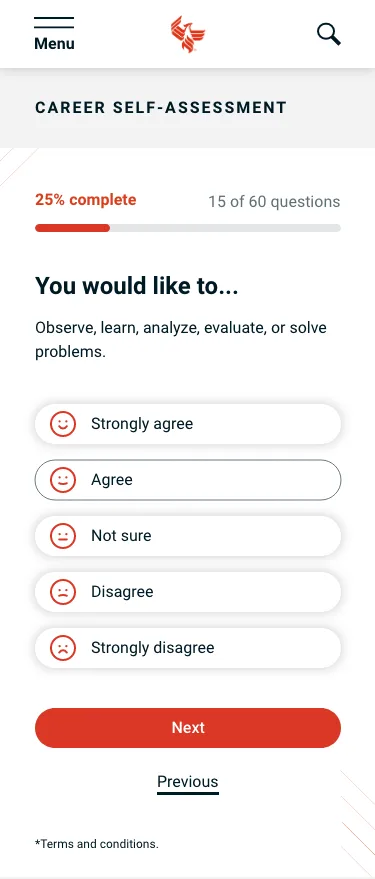
- Detailed assessment (2-4 mins)
- Condensed assessment
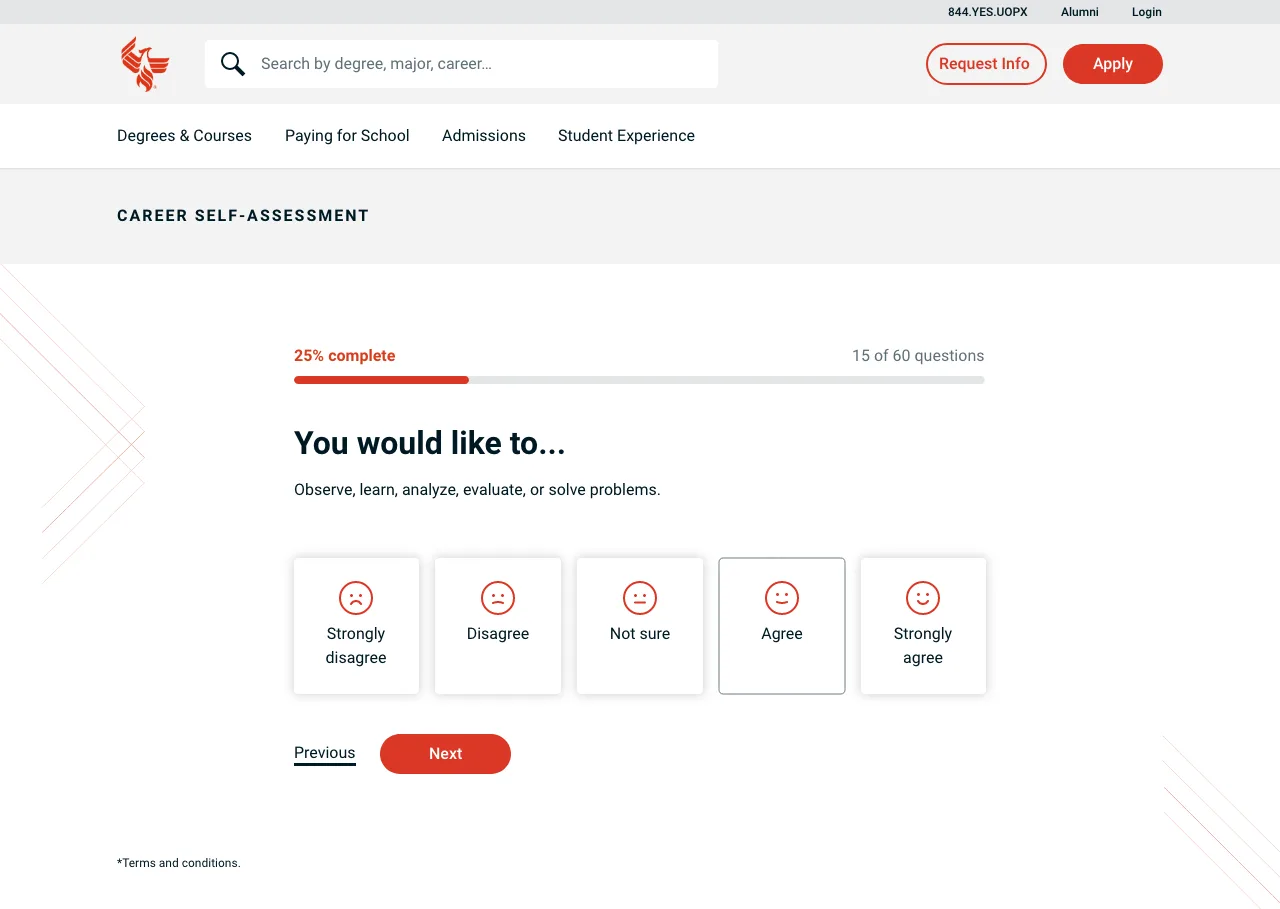
- Progress bar
- Emoji and icons for fun
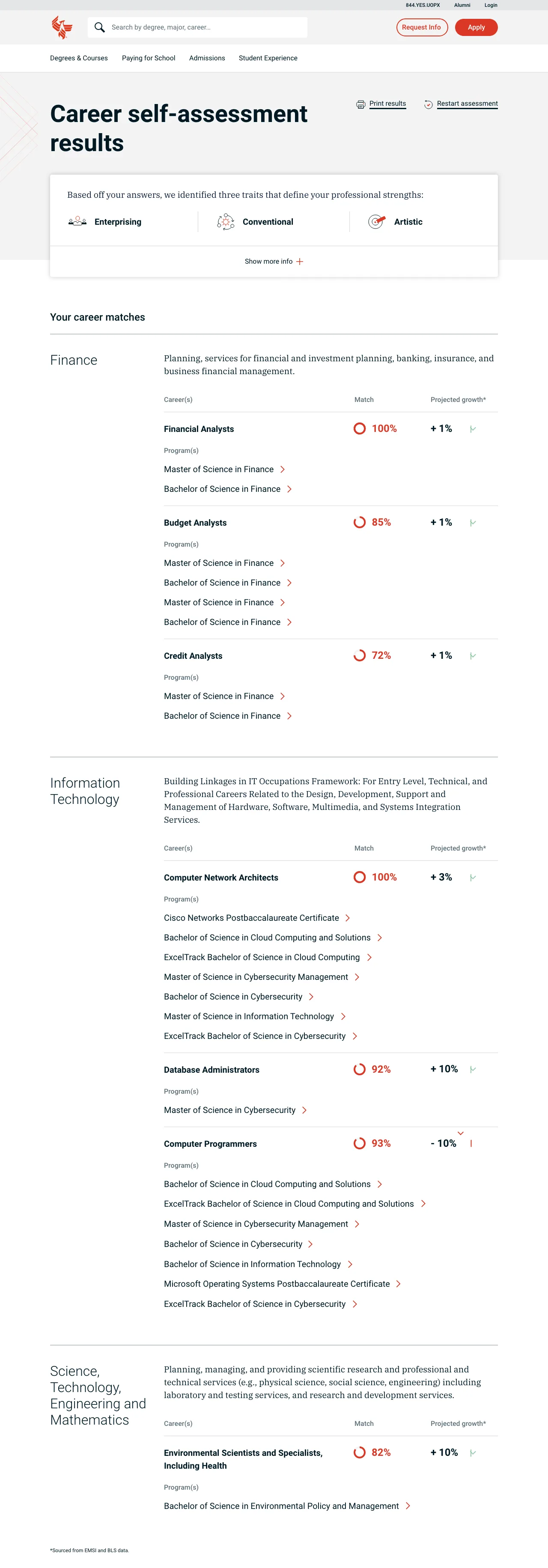
- Top traits
- Career matches
- Projected growth
- Career intro
- Career pathway
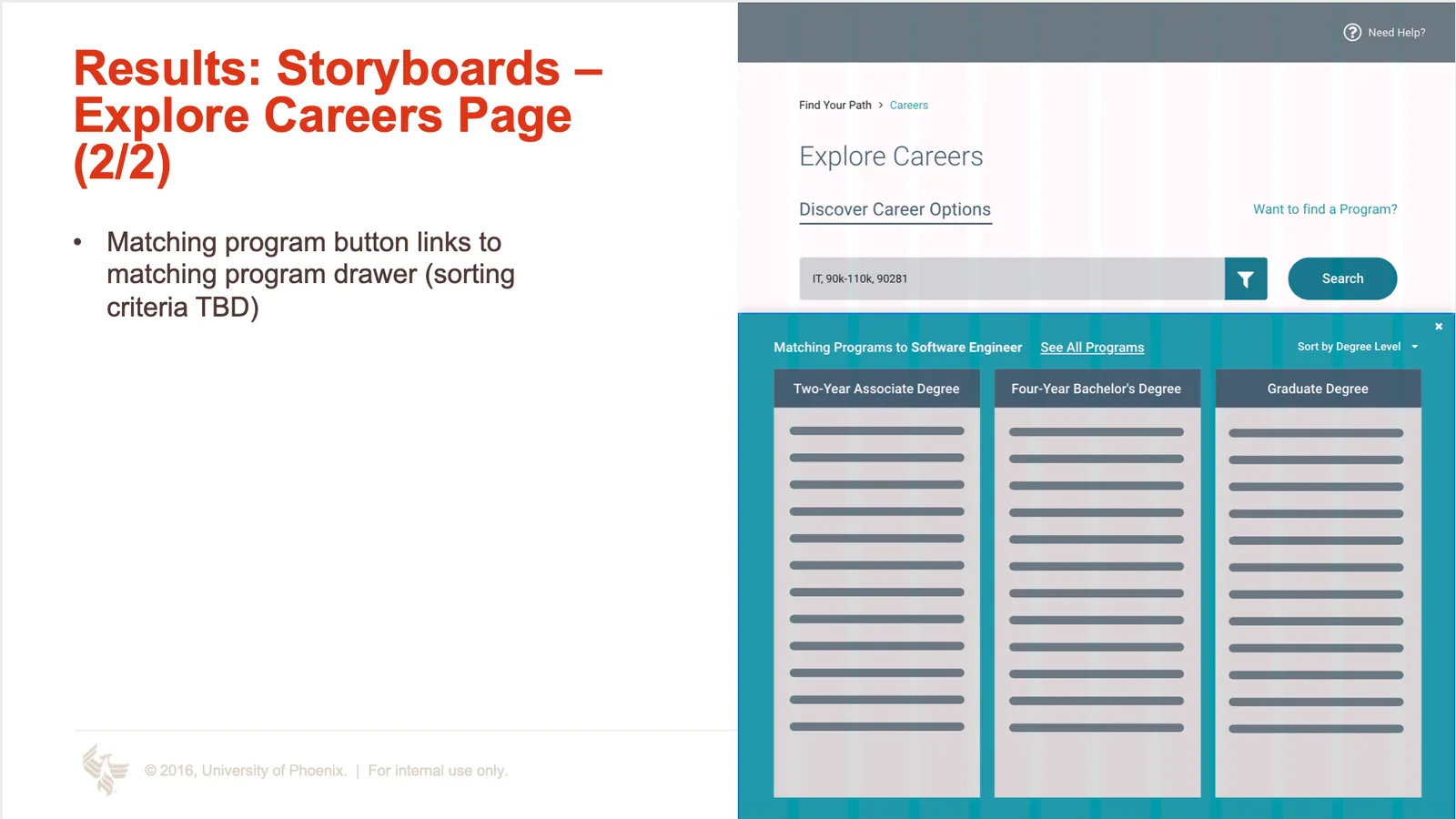
Program Finder Iterations
- Include quick facts such as cost, credits, and program length
- Add icons or pictures for each program to enhance visual engagement
- Implement autofill for the search bar
Career Assessment Iterations
- Use direct, clear questions to avoid confusion
- Add animated emojis in the assessment to make the UI more engaging and clearer
- Shorten the text on the results page and use bullet points for clarity
Final Designs
Career/skill assessment tool samples:
Program finder sample:
Mobile samples:


What five days bought
Over the course of five intense days, we embarked on a design sprint that allowed us to rapidly progress from defining our goals to developing actionable solutions. We tackled problems head-on, explored innovative ideas, and meticulously organized and prioritized our findings.
Through collaborative mapping, sketching, and critique sessions, every team member's voice was heard, ensuring a unified vision before moving into the prototyping phase.
The real lesson: This sprint was not just about speed, but about aligning our efforts and leveraging our collective creativity to drive meaningful outcomes. The forked experience design (two distinct flows serving three persona types) would have taken months to negotiate through normal process. Five days of structured constraint forced decisions that committee meetings never would.